
Introduction
Orthopedic physiotherapy is one of the most effective treatments for people who suffer from pain, stiffness, or limited movement due to injuries, surgeries, or chronic joint problems. It focuses on improving the function of your bones, joints, muscles, ligaments, and tendons through safe exercises and manual therapy.
Whether you have back pain, neck stiffness, a fracture, or have recently undergone joint replacement surgery, orthopedic physiotherapy helps you recover naturally without heavy medication or surgery. It not only heals your body but also strengthens it to prevent future injuries.
Let’s explore some of the major conditions where orthopedic physiotherapy plays a key role in recovery and long-term mobility.
Back & Neck Pain Management
Back and neck pain are two of the most common orthopedic problems in today’s world. Poor posture, long sitting hours, stress, and lack of exercise often cause stiffness and muscle tension in these areas. Orthopedic physiotherapists use techniques like manual therapy, traction, heat therapy, and specific stretching and strengthening exercises to reduce pain and improve mobility.
For example, if you have lower back pain due to a slipped disc or muscle strain, a physiotherapist may suggest core strengthening exercises, ergonomic corrections, and lifestyle advice to support your spine. Similarly, for neck pain caused by bad posture or mobile overuse, gentle mobilization and neck stretches can work wonders.
Over time, these treatments help in restoring spinal alignment and improving posture, giving lasting relief from pain and discomfort.
Post-Fracture Rehabilitation
After a fracture, when the bone is healed and the cast is removed, many people face stiffness, swelling, and weakness in the affected limb. This is where post-fracture physiotherapy becomes essential.
Orthopedic physiotherapists create customized programs that include gentle range-of-motion exercises, muscle strengthening, balance training, and swelling reduction techniques to restore normal function.
For example, after a wrist fracture, you may find it hard to rotate or bend your wrist properly. Through gradual exercises and manual therapy, your physiotherapist will help regain full movement and rebuild strength.
The goal of post-fracture rehabilitation is to make you return to your daily activities quickly and safely without pain or limitation.
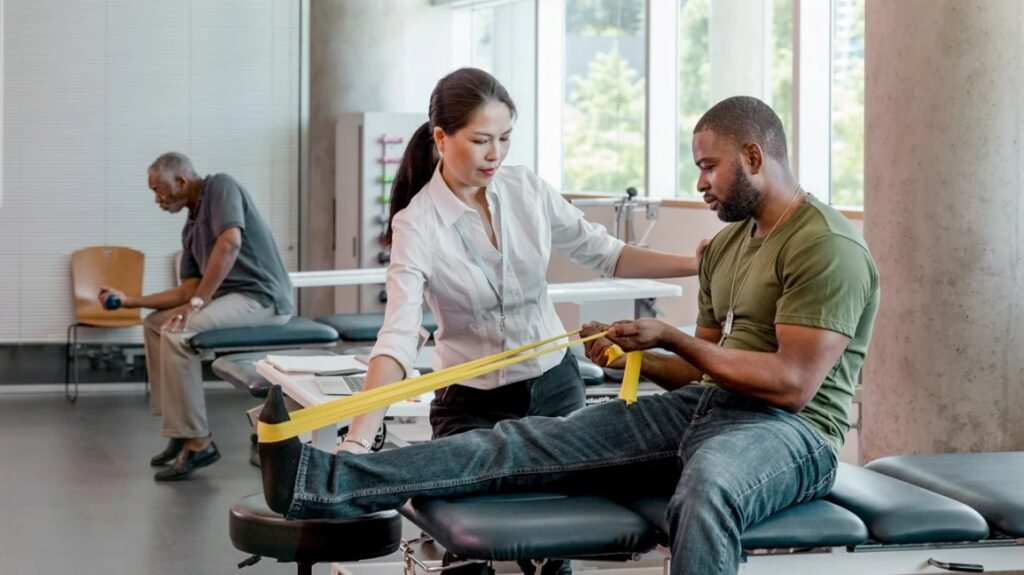
Joint Replacement Rehabilitation (Knee, Hip, Shoulder)
Joint replacement surgeries, such as knee replacement, hip replacement, or shoulder replacement, require dedicated physiotherapy to ensure a successful recovery. After surgery, the replaced joint needs to regain strength, flexibility, and coordination.
In knee replacement rehabilitation, physiotherapy helps reduce swelling, improve joint motion, and restore walking ability through progressive exercises. For hip replacement, it focuses on improving balance and strengthening hip and leg muscles. Similarly, after shoulder replacement, specific exercises are used to restore arm strength and rotation.
Regular sessions with an orthopedic physiotherapist ensure that you regain your mobility faster and prevent any complications like stiffness or dislocation. Most importantly, it helps you return to a pain-free and active lifestyle.
Arthritis & Spondylitis Treatment
Arthritis and spondylitis are chronic conditions that cause inflammation, stiffness, and pain in joints and the spine. These conditions can make even simple tasks like walking, bending, or lifting difficult.
Orthopedic physiotherapy helps manage these issues through gentle joint mobilization, stretching, strengthening, and hydrotherapy (water exercises).
For arthritis patients, the aim is to maintain joint flexibility and reduce pain without putting extra stress on the affected area. In cases of cervical or lumbar spondylitis, physiotherapists focus on improving posture, relieving nerve compression, and teaching ergonomic habits.
Consistent therapy sessions can slow down the progression of these conditions and help patients stay independent and active in their daily lives.
Sciatica & Disc Bulge Therapy
Sciatica occurs when the sciatic nerve (which runs from the lower back to the legs) becomes compressed or irritated. This often happens due to a disc bulge or herniated disc in the spine. The pain may radiate from your lower back down to your leg, sometimes with numbness or tingling.
Orthopedic physiotherapy focuses on relieving the pressure on the nerve and improving spinal stability. Techniques like McKenzie exercises, nerve gliding, traction therapy, and core strengthening are used to reduce pain and improve movement.
Additionally, physiotherapists teach you safe sitting, bending, and lifting techniques to prevent future flare-ups.
With regular physiotherapy, many people recover from sciatica and disc bulge issues without the need for surgery.
Conclusion
Orthopedic physiotherapy is a natural, effective, and long-term solution for all types of bone, joint, and muscle problems. Whether you are recovering from surgery, healing after an injury, or dealing with chronic pain, physiotherapy helps you restore movement, strength, and confidence.
By combining expert hands-on care with personalized exercise programs, orthopedic physiotherapists help you live pain-free and active again. Instead of depending on painkillers or ignoring discomfort, seek professional physiotherapy support early — your body will thank you for it.