
Introduction
Manual therapy is a hands-on physiotherapy approach that focuses on improving movement, relieving pain, and restoring function in muscles and joints. It involves specialized techniques applied by trained physiotherapists to treat musculoskeletal issues, improve flexibility, and promote natural healing.
Manual therapy is often used alongside exercises, electrotherapy, and other treatments to provide faster and more effective recovery for patients with injuries, chronic pain, or mobility problems.
Let’s explore some of the most common and effective manual therapy techniques.
Joint Mobilization & Manipulation
Joint mobilization and manipulation involve gentle or controlled movements of joints to restore mobility, reduce stiffness, and relieve pain.
- Mobilization uses slow, rhythmic movements to improve joint flexibility and reduce discomfort.
- Manipulation is a quicker, targeted movement applied to restore normal joint function.
These techniques are effective for back pain, neck stiffness, shoulder or knee issues, and post-injury joint restrictions. Regular sessions help patients regain full range of motion and improve overall movement efficiency.
Myofascial Release
Myofascial release targets the connective tissues (fascia) surrounding muscles. Over time, fascia can become tight due to injury, poor posture, or overuse, causing pain and restricted movement.
Therapists apply gentle pressure and stretching techniques to release tension in the fascia. This improves circulation, reduces stiffness, and restores smooth movement.
Myofascial release is particularly helpful for chronic back pain, postural issues, and muscle tightness. It also promotes relaxation and overall comfort.
Deep Tissue Massage
Deep tissue massage focuses on the deeper layers of muscles and connective tissue. By applying firm pressure, therapists target knots, adhesions, and chronic muscle tension.
This technique relieves muscle pain, tightness, and overuse injuries, improving flexibility and function. It is commonly used for sports injuries, chronic back pain, and neck or shoulder discomfort.
Deep tissue massage enhances blood flow, accelerates healing, and supports long-term muscle health.
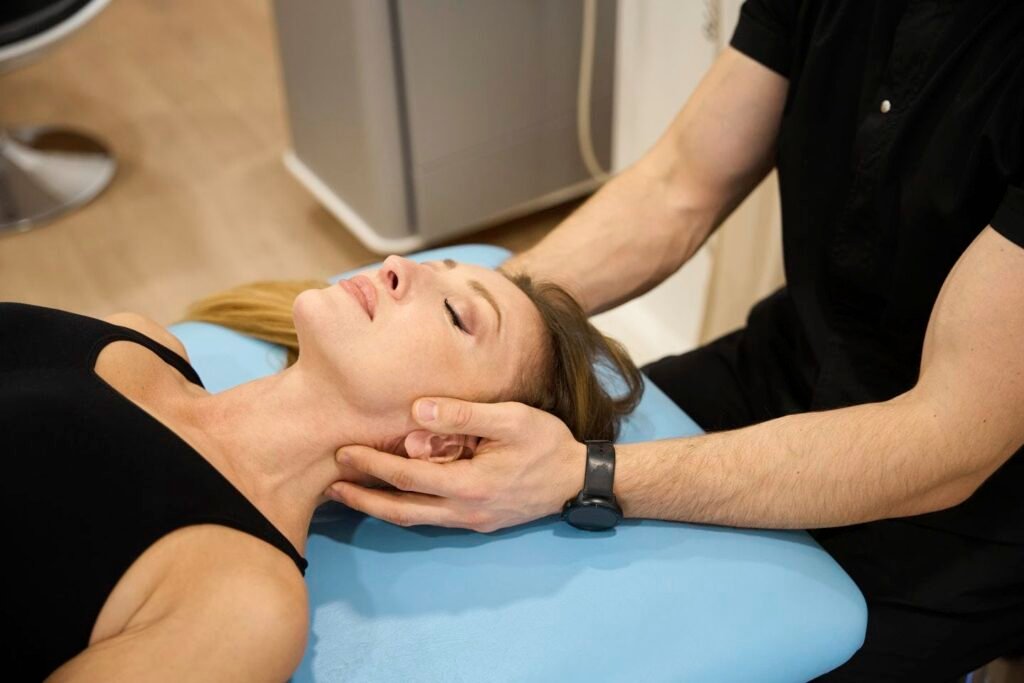
Trigger Point Therapy
Trigger point therapy focuses on specific tight spots or “knots” in the muscles that cause pain locally or refer pain to other areas. Physiotherapists apply direct pressure on these points to release tension and reduce pain.
Trigger point therapy is effective for headaches, neck and shoulder pain, and chronic musculoskeletal discomfort. It restores muscle balance, improves mobility, and alleviates associated symptoms like stiffness or fatigue.
Conclusion
Manual therapy techniques offer hands-on, effective solutions for pain relief, improved joint mobility, and muscle relaxation. Techniques such as joint mobilization, myofascial release, deep tissue massage, and trigger point therapy help patients recover faster, move freely, and feel more comfortable.
By combining these therapies with exercises and modern physiotherapy treatments, patients can achieve long-term pain relief, enhanced flexibility, and better overall physical function.