
Introduction
In today’s digital world, most people spend long hours sitting at desks, working on computers, or using mobile devices. This lifestyle often leads to poor posture, muscle stiffness, neck pain, and back discomfort. Over time, bad posture can also cause chronic spinal problems and reduced flexibility.
Postural and ergonomic correction physiotherapy helps you identify and fix posture-related issues caused by incorrect sitting, standing, or working positions. It combines physical therapy techniques, strengthening exercises, and ergonomic guidance to promote better body alignment and reduce pain naturally.
By correcting your posture and improving your workspace setup, you can prevent injuries, enhance productivity, and maintain a healthier, more active lifestyle.
Let’s explore the main areas where postural and ergonomic physiotherapy can help.
Office/Desk Job Pain Relief
People working long hours at desks are among the most affected by posture-related problems. Continuous sitting, slouching, or leaning forward while working on computers can strain the neck, shoulders, and lower back. Over time, this can lead to conditions like cervical spondylitis, lumbar pain, or repetitive strain injuries.
Physiotherapists use manual therapy, stretching, and muscle-strengthening exercises to relieve tightness and pain caused by prolonged sitting. They also teach posture awareness techniques — how to sit properly, adjust screen height, and position your feet and arms comfortably.
For example, taking short breaks every hour, performing neck and shoulder stretches, and sitting with the back supported can make a huge difference. Regular physiotherapy sessions reduce stiffness, improve flexibility, and prevent pain from returning.
By addressing desk-related pain early, you can work more comfortably and maintain long-term spinal health.
Posture Training Programs
Good posture is more than just standing straight — it’s about keeping your body balanced and aligned to reduce unnecessary strain on muscles and joints. Posture training programs focus on improving your awareness and control of body positioning in all daily activities, whether you’re sitting, walking, or exercising.
Physiotherapists assess your spinal alignment, muscle balance, and movement patterns to identify postural deviations such as rounded shoulders, forward head posture, or pelvic tilt. They then design customized exercises to strengthen weak muscles and stretch tight ones.
Common techniques include core strengthening, shoulder stabilization, pelvic alignment exercises, and mirror feedback training. Over time, your body learns to maintain proper posture naturally without conscious effort.
Posture correction not only reduces pain but also improves breathing, circulation, and overall energy levels. With regular training, you’ll look more confident and feel lighter and more active throughout the day.
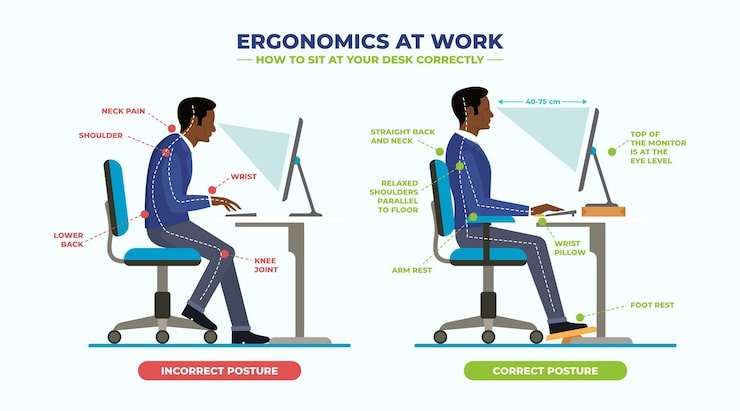
Ergonomic Workstation Setup Guidance
Even with good posture, your work environment plays a major role in maintaining comfort and preventing injuries. An ergonomic workstation setup ensures that your workspace supports your body’s natural alignment.
Physiotherapists provide personalized ergonomic assessments and adjustments for your desk, chair, monitor, and keyboard. For example:
- The top of your computer screen should be at eye level.
- Your chair should support your lower back and allow your feet to rest flat on the floor.
- Your elbows should stay close to your body at a 90-degree angle while typing.
They also recommend using ergonomic accessories such as lumbar cushions, footrests, and adjustable chairs to minimize strain. Proper ergonomics not only reduce the risk of neck and back pain but also increase work efficiency and comfort.
A well-designed workspace encourages better posture, prevents fatigue, and supports long-term musculoskeletal health.
Conclusion
Postural and ergonomic correction is essential for anyone who spends long hours sitting or standing in fixed positions. It’s not just about looking straight — it’s about creating harmony between your body and your environment.
Through physiotherapy, posture training, and ergonomic adjustments, you can prevent pain, reduce fatigue, and enjoy better movement throughout your day. Investing in proper posture care today ensures long-term spinal health, higher energy levels, and improved productivity at work.
Remember, small daily changes — like sitting upright, stretching regularly, and keeping your workspace ergonomic — can make a big difference in how your body feels and functions for years to come.